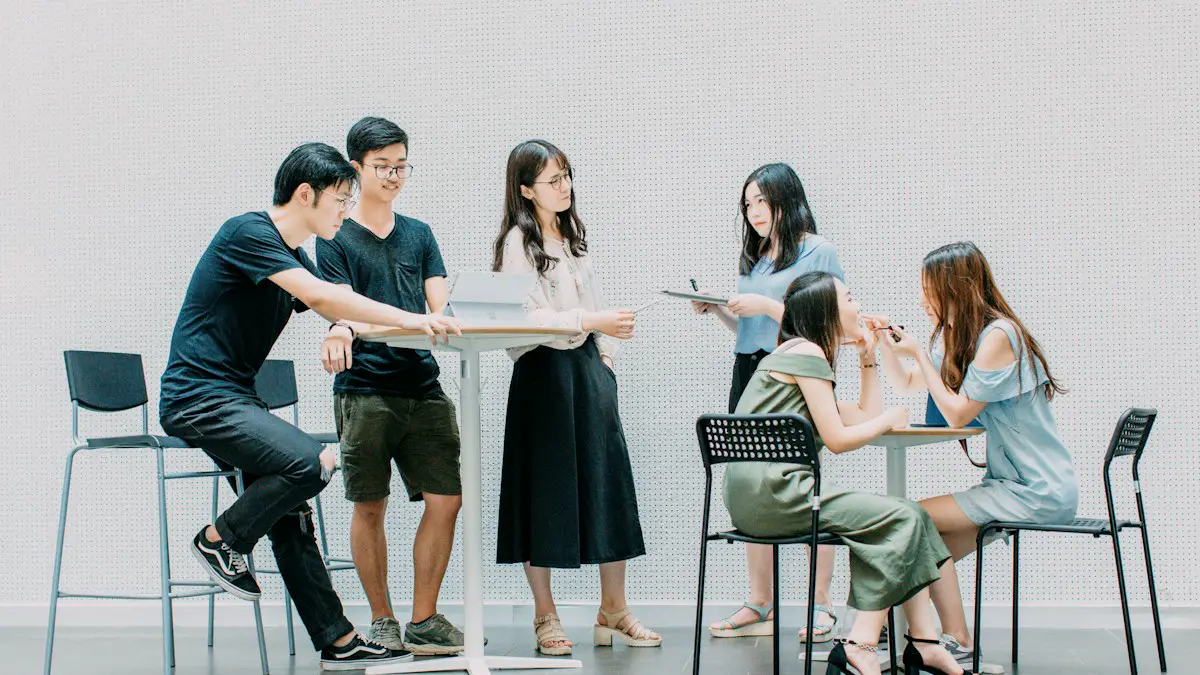
A lot of campus drives run the group discussion and the personal interview back to back: GD in the morning, shortlist by lunch, interviews in the afternoon. Even when they're a few days apart, most students only prepare for whichever round feels scarier. The result is predictable: a strong interview candidate who never gets there because they said nothing in the GD, or a confident GD speaker who can't explain their own final-year project.
They test overlapping but different things
A GD tests how you think and speak with other people: can you make a clear point quickly, build on what someone else said, and stay calm when three people talk at once. A personal interview tests how you think and speak about yourself and your subject: your projects, your choices, your fundamentals. The shared skill is structured speaking. That's good news, because practising one improves the other, as long as you don't only practise one.
A simple 6-day split
- Day 1: build your raw material. Write down your two strongest projects, one internship or team experience, and your answers to "tell me about yourself" and "why this company." Then pick five current topics likely to come up in GDs (technology, economy, education, environment, work culture) and note two points for and against each.
- Day 2: GD practice. Speak on two topics for 90 seconds each, out loud, timed. Focus on opening with a clear position in the first sentence.
- Day 3: interview practice. One full mock interview on your actual target role. Note which answers felt shaky.
- Day 4: fix the shaky answers. Rewrite only the two or three weakest answers and say them aloud again. Don't re-prepare everything.
- Day 5: GD with people. Get three or four friends together for a 15-minute practice GD. The goal is getting a point in without cutting someone off.
- Day 6: light review. Re-read your notes, sleep properly. No new material.
The skill both rounds share: a clear first sentence
In a GD, your first sentence is how the panel decides whether you're worth listening to. In an interview, your first sentence decides whether the rest of your answer sounds organised. Practise starting every answer with the point, then the reason, then an example. "I think remote work helps productivity for focused roles, because…" beats "So basically, there are many aspects to this topic…"
What to do on the day itself
- If the GD is first, don't spend the gap before the interview replaying what you said in the GD. It's done.
- Carry a one-page sheet with your project summaries. Read it once before the interview, not ten times.
- Drink water and eat something light. It sounds trivial, but a four-hour placement day is long.
For the GD side in more depth, see our group discussion preparation guide. For the interview side, a free round of AI Mock Interview practice will show you which answers still need work before the real panel does.