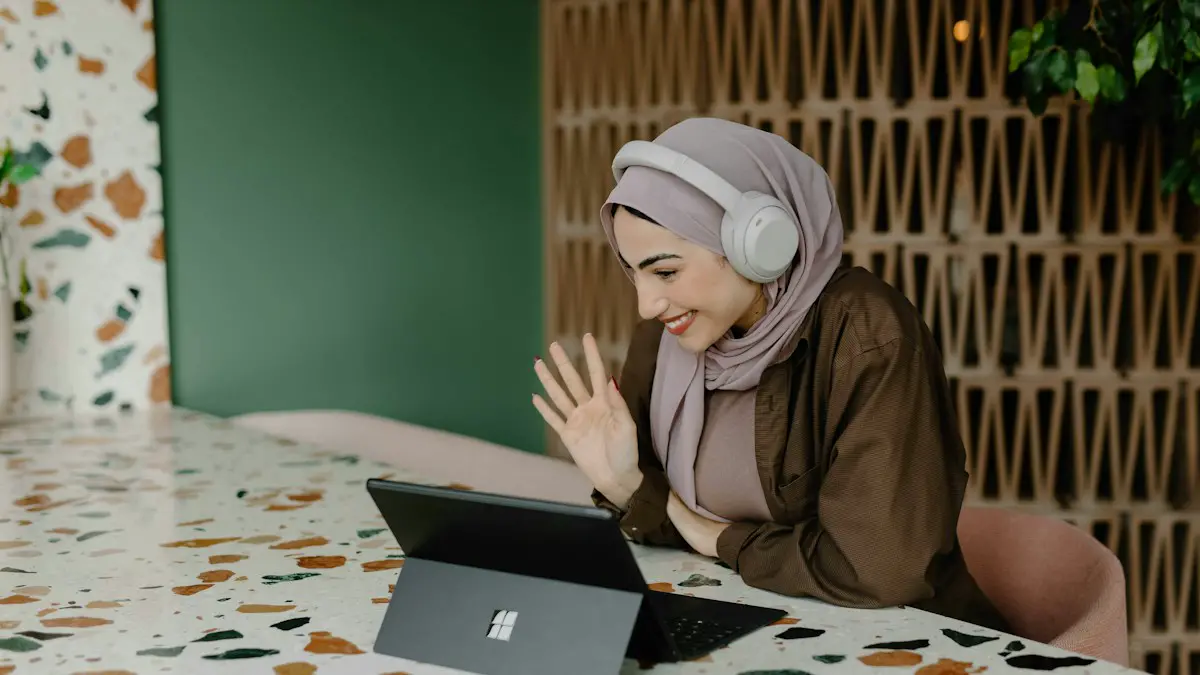
Solo practice is where good answers get built. You can rehearse "tell me about yourself" twenty times, polish your project explanation and learn the STAR structure until it's automatic. But there's a set of things you can only find out when real people are watching and asking. That's what a live mock panel is for.
1. How you handle a follow-up you didn't expect
Prepared answers are the easy part. The real test is the second question: "Why did you choose that approach?", "What would you do differently?", "What exactly was your part?" A person asks these naturally because they're actually curious. You'll quickly see which of your stories have depth behind them and which fall apart after one "why".
2. What you do with your eyes and hands
On a video call, eye contact means looking at the camera, not at the face on your screen. Most people don't realise how often they look down at notes or away while thinking until someone points it out. The same goes for fidgeting, touching your face or leaning out of frame.
3. Whether you actually answered the question
It's surprisingly common to give a good answer to a slightly different question. A real interviewer will say "That's interesting, but what I asked was…". It's uncomfortable, and it's the most useful thing that can happen in practice.
4. How you cope with more than one interviewer
Many final rounds have two or three people on the panel. Answering one person while staying aware of the others, handling a second person jumping in, and not just talking to whoever seems friendliest are skills you can only practise with an actual panel.
5. How your nerves really show up
Talking to yourself doesn't make your heart race. Being watched by people you respect does. A practice panel lets you meet that nervousness before the real day: speaking too fast, going blank, over-explaining. Seeing it once in a low-stakes setting takes a lot of its power away.
Setting up a panel that helps
- Invite two or three people: ideally one who has done the job you want and one who won't let a vague answer slide.
- Brief them: the role, your résumé and the areas to push on. Ask them to stay in character and save feedback for the end.
- Keep it to time: 30 minutes is a realistic first round.
- Write down what happened within the hour, then pick the two fixes that matter most.
There's a full walkthrough in our guide to running a mock interview with friends or mentors, and a guide you can send your panel on how to be a good mock interviewer.
Doing it on Sanviora
A P2P Video Interview puts you and up to three interviewers on one live video call. Your interviewers join from your invite link with just their name. Everyone agrees to recording first, and when the call ends you get an AI report that scores your answers to the questions they actually asked. Pair it with solo AI Mock Interview practice in between panels to rehearse the fixes.